
Local, Seasonal, Organic - What to Eat
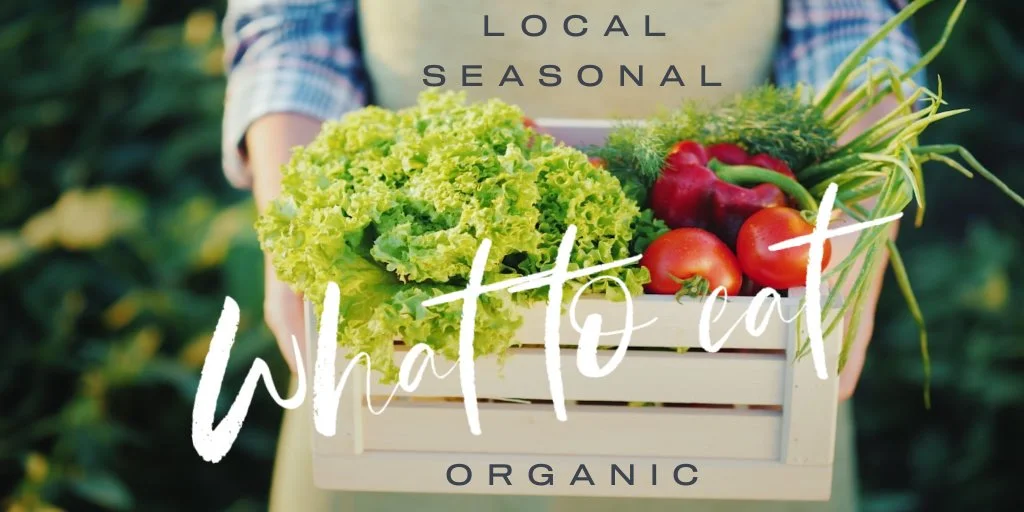
Have you ever heard us say “choose organic, local, and seasonal”? While it sounds good, there are actually many reasons behind these recommendations. Scientific research has repeatedly found that organic, local, and seasonal produce yield less chemical residue in the form of synthetic pesticides and fertilizers, more nutrients in the food products, and greater implications on our health and communities.
Farms that practice organic methods follow strict guidelines for production, while emphasizing practices that support the land and soil. Organic farmers are prohibited from using GMOs and synthetic fertilizers, pesticides, and herbicides. This means no Glyphosate can be used! These toxic chemicals are endocrine disruptors and cause cancer and innumerable other health issues in humans. They are additionally restricted from using GMO feed, antibiotics, growth steroids, and drugs to treat animals. Conventional farms are unrestricted in what is sprayed or the quantity sprayed on their crops. Did you know that conventional practices spray antibiotics on fruit trees? The overuse of antibiotics on our food is known to contribute to resistance in humans—yet it is allowed to continue in conventional productions. They can legally use biosolids, treated human sewage contaminated with heavy metals, endocrine disruptors, pathogens, pharmaceuticals, and more, as a fertilizer and soil conditioner. Runoff from these farms can contaminate ground water and pollute our waterways. In opposition, organic farms conserve and replenish natural ecosystems for cleaner, purer environments.
One definition of local is food which is grown within a hundred-mile radius of its sale and consumption. On average, produce at the grocery store has been transported 1,200 miles. Buying local significantly cuts the food’s time in transit, leading to greater implications for us. Not only does local food taste fresher and better, but it is also more nutrient-dense than foods that are transported long distances as they are picked before their ripening point and artificially ripened later with ethylene gas. During long-distance transport, food loses vitamins and minerals due to decomposition. Because of this, some produce is only available locally because it can’t survive the transport process—you gain access to new options! When local produce is allowed to vine ripen, more nutrients become stored in the products themselves. Additionally, there is a greater chance that these small-scale farms practice sustainable methods that work to increase the nutrient profile of the soil that grows our food.
Most produce you find at a local producer will be in-season, ensuring maximum and adequate nutritional value. The nutrients in foods harvested during different seasons rotate to meet the specific needs of our bodies throughout that season—nature provides what we need! For example, bountiful root vegetables provide fiber and complex carbohydrates to keep us satiated and sustained through the fall.
Many Americans suffer from a condition known as “hidden hunger”, a deficiency of micronutrients that occurs while simultaneously meeting daily caloric needs. Conventional agricultural practices that deplete and erode soil, leave toxic chemical residues, and in turn reduce the nutrient density of our food products appear to contribute to this micronutrient deficiency that is becoming widespread in our country. It is vital for our health and the sustainability of our planet to buy organic, local, and seasonal foods. Support your local economy, build new relationships in your community, and develop a connection with food that nourishes you!
References:
Admin, General. “Why Local Food Is Better for You.” Rodale Institute, rodaleinstitute.org/blog/why-local-food-is-better-for-you/.
Hari, Vani. “10 Reasons Why You Should Choose the Organic Food Label over the Non-GMO Label.” Food Revolution Network, foodrevolution.org/blog/why-choose-organic/.
Honeycutt, Emily. “Why Buy Local Food? It’s Healthier for You and Better for the Environment.” Food Revolution Network, foodrevolution.org/blog/why-buy-local-food/.
“Organic vs Conventional.” Rodale Institute, rodaleinstitute.org/why-organic/organic-basics/organic-vs-conventional/.
Wadyka, Sally. “Farmers Market Produce: Local vs. Organic.” Consumer Reports, www.consumerreports.org/fruits-vegetables/farmers-market-produce-local-vs-organic/.
-Sasha Vassallo, BS 8/27/26